

Four Labour Codes Replaced now 29 existing laws
Big News: For Employers as well as Employees
- The Code on Wages (2019): This act now replaced the 4 previous laws (The Payment of Wages Act (1936), The Minimum Wages Act (1948), The Payment of Bonus Act (1965), The Equal Remuneration Act (1976),
- Industrial Relations Code (2020): It replaces the following 3 major labour laws (The Industrial Disputes Act (1947), The Trade Unions Act (1926), The Industrial Employment (Standing Orders) Act (1946)
- Code on Social Security (2020): It replaces 9 existing labour laws (The Employees’ Provident Funds and Miscellaneous Provisions Act (1952), The Employees’ State Insurance Act (1948), The Employees’ Compensation Act (1923), The Employment Exchanges (Compulsory Notification of Vacancies) Act (1959), The Maternity Benefit Act (1961), The Payment of Gratuity Act (1972), The Cine-Workers Welfare Fund Act (1981), The Building and Other Construction Workers Welfare Cess Act (1996), The Unorganised Workers’ Social Security Act (2008).
- Occupational Safety, Health and Working Conditions (OSHWC) Code (2020): It replaces 13 existing labour laws:
- The Factories Act, 1948
- The Mines Act, 1952
- The Dock Workers (Safety, Health and Welfare) Act, 1986
- The Building and Other Construction Workers (Regulation of Employment and Conditions of Service) Act, 1996
- The Working Journalists and Other Newspaper Employees (Conditions of Service) and Miscellaneous Provisions Act, 1955
- The Working Journalists (Fixation of Rates of Wages) Act, 1958
- The Motor Transport Workers Act, 1961
- The Sales Promotion Employees (Conditions of Service) Act, 1976
- The Beedi and Cigar Workers (Conditions of Employment) Act, 1966
- The Cine-Workers and Cinema Theatre Workers (Regulation of Employment) Act, 1981
- The Inter-State Migrant Workmen (Regulation of Employment and Conditions of Service) Act, 1979
- The Contract Labour (Regulation and Abolition) Act, 1970
- The Audio-Visual Workers (Regulation of Employment) Act, 1986
Now all 29 existing laws are replaced from today, 21/11/2025. These new 4 laws will cover all labour related issues.
A comparison of the labour ecosystem, before and after the implementation of the Labour Codes, is as follows:
|
Present Situation |
After Labour Reforms |
|
|
Formalisation of Employment |
No mandatory appointment letters |
Mandatory appointment letters to all workers. Written proof will ensure transparency, job security, and fixed employment. |
|
Social Security Coverage |
Limited Social Security Coverage |
Under Code on Social Security, 2020 all workers including gig & platform workers to get social security coverage. All workers will get PF, ESIC, insurance, and other social security benefits. |
|
Minimum Wages |
Minimum wages applied only to scheduled industries/employments; large sections of workers remained uncovered |
Under the Code on Wages, 2019, all workers to receive a statutory right minimum wage payment. Minimum wages and timely payment will ensure financial security. |
|
Preventive Healthcare |
No legal requirement for employers to provide free annual health check-ups to workers |
Employers must provide all workers above the age of 40 years with a free annual health check-up. Promote timely preventive healthcare culture |
|
Timely Wages |
No mandatory compliance for employers payment of wages |
Mandatory for employers to provide timely wages, ensuring financial stability, reducing work stress and boosting overall morale of the workers. |
|
Women workforce participation |
Women’s employment in night shifts and certain occupations was restricted |
Women are permitted to work at night and in all types of work across all establishments, subject to their consent and required safety measures. Women will get equal opportunities to earn higher incomes – in high paying job roles. |
|
ESIC coverage |
ESIC coverage was limited to notified areas and specific industries; establishments with fewer than 10 employees were generally excluded, and hazardous-process units did not have uniform mandatory ESIC coverage across India |
ESIC coverage and benefits are extended Pan-India – voluntary for establishments with fewer than 10 employees, and mandatory for establishments with even one employee engaged in hazardous processes. Social protection coverage will be expanded to all workers. |
|
Compliance Burden |
Multiple registrations, licenses and returns across various labour laws. |
Single registration, PAN-India single license and single return. Simplified processes and reduction in Compliance Burden. |
Benefits of Labour Reforms Across Key Sectors:
- Fixed-Term Employees (FTE):
- FTEs to receive all benefits equal to permanent workers, including leave, medical, and social security.
- Gratuity eligibility after just one year, instead of five.
- Equal wagesas permanent staff, increasing income and protection.
- Promotes direct hiring and reduces excessive contractualisation.
2. Gig & Platform Workers:
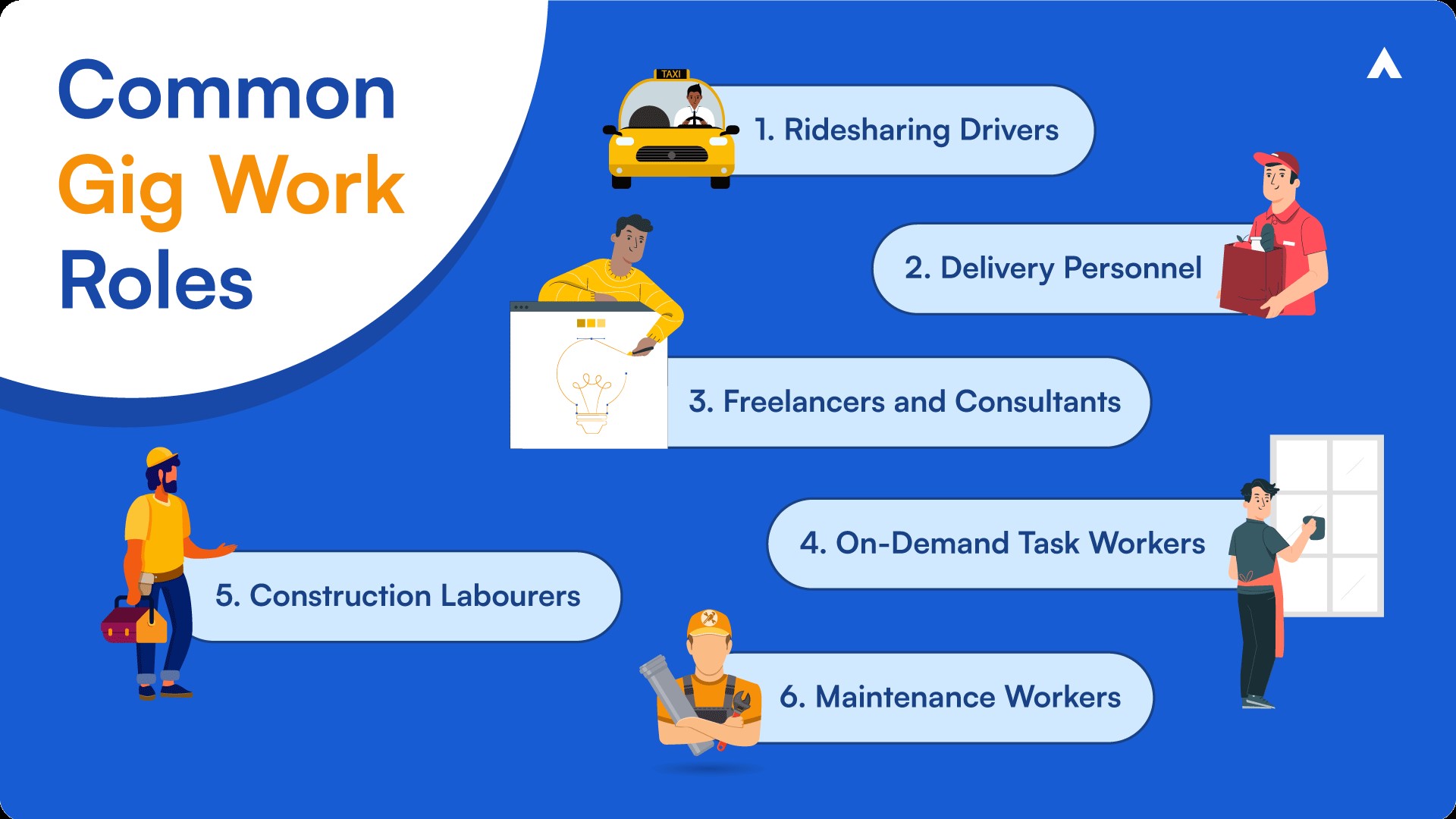
- ‘Gig work’, ‘Platform work’, and ‘Aggregators’ have been defined for the first time.
- Aggregators must contribute 1–2% of the annual turnover, capped at 5% of the amount paid/payable to gig and platform workers.
- Aadhaar-linked Universal Account Number will make welfare benefits easy to access, fully portable, and available across states, regardless of migration.
3. Contract Workers:
- Fixed-term employees (FTE) will increase employability and ensure social security, legal protection like benefits equal to permanent employees.
- Fixed-term employees will become eligible for gratuity after one year of continuous service.
- Principal employer will provide health benefits and social security benefits to contract workers.
- Workers to get free annual health check-up.
- Women Workers:
- Gender discrimination legally prohibited.
- Equal pay for equal work
- Women are permitted to work night shifts and in all types of work(including underground mining and heavy machinery), subject to their consent and mandatory safety measures.
- Mandatory women’s representation in grievance redressal committees
- Provision to add parents-in-law in Family Definition of Female employees, expanding dependent coverage and ensuring inclusivity.
- Youth Workers:
- Minimum wage is guaranteed for all workers.
- All workers to get appointment letters, – promoting social security, employment history and formal employment.
- Worker exploitation by employers is prohibited—payment of wages during leave has been made mandatory.
- To ensure a decent standard of living, workers will receive wages as per the floor wagedetermined by the Central Government.
- MSME Workers:
- All MSME workers covered under the Social Security Code, 2020, eligibility based on employee count.
- Minimum wage guaranteed for all workers.
- Workers will have access to facilities such as canteens, drinking water, and rest areas.
- Provisions for standard working hours, double overtime wages, and paid leave.
- Timely wage payment ensured.
7. Beedi & Cigar Workers:
- Minimum wagesguaranteed for all.
- Working hours capped at 8 -12 hours per day, 48 hours per week has been capped.
- Overtime Work beyond prescribed hours, to be consent based and pay at least double the normal wage rate.
- Timely payment of wages ensured.
- Workers eligible for Bonus after completing 30 days of work in a year.
8. Plantation Workers:
- Plantation workers are now brought under the OSHWC Code and the Social Security Code.
- Labour Codes apply to plantations with more than 10 workers or 5 or more hectares.
- Mandatory safety training on handling, storing, and using chemicals.
- Protective equipment mandatory to prevent accidents and chemical exposure.
- Workers and their families to get full ESI medical facilities; Education facilities for their children are also guaranteed.
- Audio-Visual & Digital Media Workers:
- Digital and audio-visual workers, including journalists in electronic media, dubbing artists, and stunt persons will now receive full benefits.
- Mandatory appointment letter for all workers –clearly stating their designation, wages, and social security entitlements.
- Timely payment of wages
- Overtime Work beyond prescribed hours, to be consent based and pay at least double the normal wage rate.
- Mine Workers:
- The Social Security Code treats certain commuting accidents as employment-related, subject to conditions of time, and place of employment.
- Central Government notified standards to standardize workplace occupational safety and health conditions.
- Health safety for all workers will be ensured. Free annual health check-up will be provided.
- Limit on working hoursset to 8 to 12 hours per day, 48 hours per week to ensure health and work-life balance.
- Hazardous Industry Workers:
- All workers will receive free annual health check-ups.
- Central Governmentwill frame national standards for better safety of workers.
- Women can work in all establishments, including underground mining, heavy machinery, and hazardous jobs, ensuring equal job opportunities for all.
- Mandatory safety committee at each site for on-site safety monitoring, and safe handling of hazardous chemicals ensured.
- Textile Workers:
- All Migrant Workers (direct, contractor-based and self-migrated) to get Equal wages, welfare benefitsand PDS portability benefits.
- Workers can raise claims for upto 3 years for settlement of pending dues, facilitating flexible and easy resolution.
- Provision for double wages for workers for overtime work.
- IT & ITES Workers:
- Release of Salary mandatory by the 7th of every month. Transparency and trust ensured.
- Equal pay for equal work made mandatory, women’s participation is strengthened.
- Facility for women to work night shifts in all establishments – women to get opportunity to earn higher wages.
- Timely resolution of harassment, discrimination, and wage related disputes.
- Guarantee of social security benefits through fixed-term employment and mandatory appointment letters.
- Dock Workers:
- All Dock workers to get formal recognition, Legal Protection.
- Mandatory appointment letters to guarantee social security benefits.
- Provident fund, pension, and insurance benefits ensured for all, whethercontract or temporary dock workers.
- Employer-funded annual health check-ups mandatory.
- Dock workers to get mandatory medical facilities, first aid, sanitary and washing areas, etc., to ensure decent work conditions and safety.
- Export Sector Workers:
- Export sector fixed term workers to receive gratuity, provident fund (PF), and other social security benefits.
- Every worker to have the option of availing annual leaves after 180 days of work in a year.
- Every worker to get right to timely wage payment and no unauthorized wage deductions and no wage ceiling restrictions.
Key Features of the codes:
- Women allowed to work in night shifts with consent, ensuring opportunity to earn higher income.
- Safety and welfare measures include mandatory written consent, double wages for overtime, safe transportation, CCTV surveillance, and security arrangements.
- National Floor Wageto ensure no worker receives a wage below the minimum living standard.
- Gender-neutral pay and job opportunities, explicitly prohibiting discrimination—including against transgender persons.
- Inspector-cum-Facilitator system, shifting enforcement towards guidance, awareness and compliance support rather than punitive action.
- Faster and predictable dispute resolution, with two-member Industrial Tribunals and the option to approach tribunals directly after conciliation.
- Single registration, single licence and single returnacross safety and working-conditions requirements, replacing multiple overlapping filings.
- National OSH Boardto set harmonised safety and health standards across sectors.
- Mandatory safety committees in establishments with 500+ workers, improving workplace accountability.
- Higher factory applicability limits, easing regulatory burden for small units while retaining full safeguards for workers.

Add a Comment